


Quick Overview
This article brings together real Golive reviews to show how teams improve environment and release visibility by centralizing information inside Jira. With a shared, reliable view of what is running and where, teams coordinate more easily and handle complex releases with greater confidence.
What happens when many teams, across different roles and industries, are trying to answer the same question: “What is actually running, where, and when?”
When teams manage multiple environments and frequent releases, visibility stops being a nice-to-have and becomes a daily necessity. Across different organizations, roles, and setups, the challenge is often the same: knowing what is deployed, where it is running, and how changes unfold over time.
This article brings together several real Apwide Golive Reviews to demonstrate that when environment and release information is centralized and visible inside Jira, coordination improves, decisions feel safer, and complex release processes become easier to handle across the entire team.
The Turning Point: Centralizing Information With Proper Tools
For many teams, as Kaviraj Thangaraj explains, the first attempt to answer these questions starts with spreadsheets or shared calendars. Environment details, URLs, hostnames, release notes, and maintenance windows are collected in Excel or Google Sheets because they are easy to create and easy to share. At the beginning, this approach feels sufficient.
As releases become more frequent and environments are reused across teams, spreadsheets struggle to keep up. Information depends on manual updates and quickly falls out of sync with what is actually running. What teams are really missing at this stage is not more data, but shared, reliable release visibility.
This is where Golive changes the dynamic. Instead of tracking environments outside Jira, information becomes centralized, current, and visible where release decisions are made.
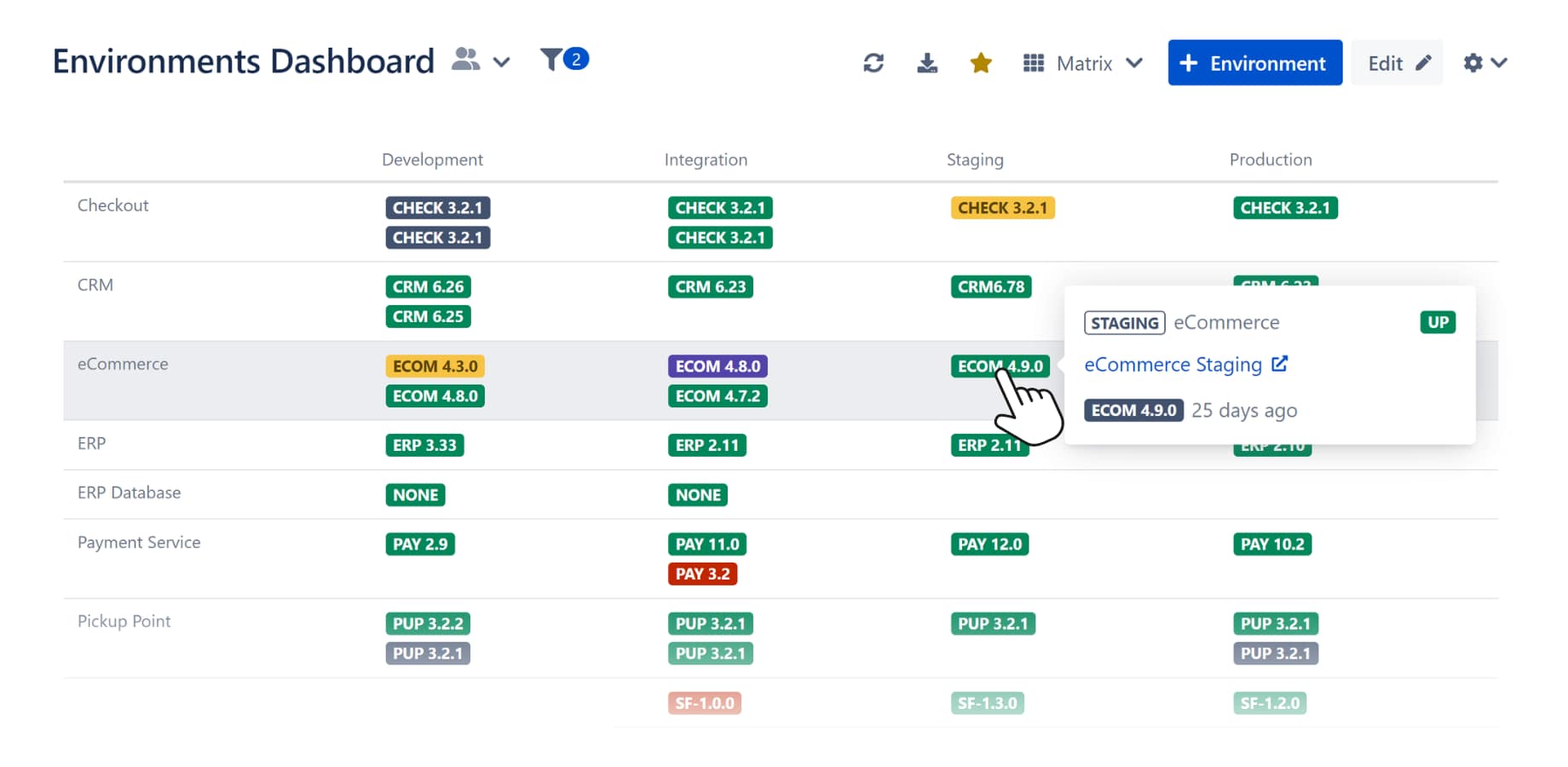
IT Environment Dashboard in Jira
As Kaviraj’s review explains:
We used to maintain the information in Excel sheets and after moving to Golive, it gives more options, a central view for all the users across the team. Now we are able to track the maintenance and releases in better way. From an environment management perspective, we are able to manage all the information in a central place in Golive, which gives a better view for the entire organisation about an application's availability and its environmental information (URL, hostname, IP, support team, etc).
If you’d like to see how Golive compares to commonly used alternatives that lack dedicated release and environment capabilities, our articles Spreadsheets vs Apwide Golive and Shared Calendars vs Apwide Golive explore this in detail.
Real-time Release Visibility for Everyone
Once the environment and release information are centralized, the first shift team's notice is how coordination changes. Instead of relying on updates passed around in meetings or messages, everyone can see what is happening as it happens. Environment and release visibility stop being role-specific and become shared.
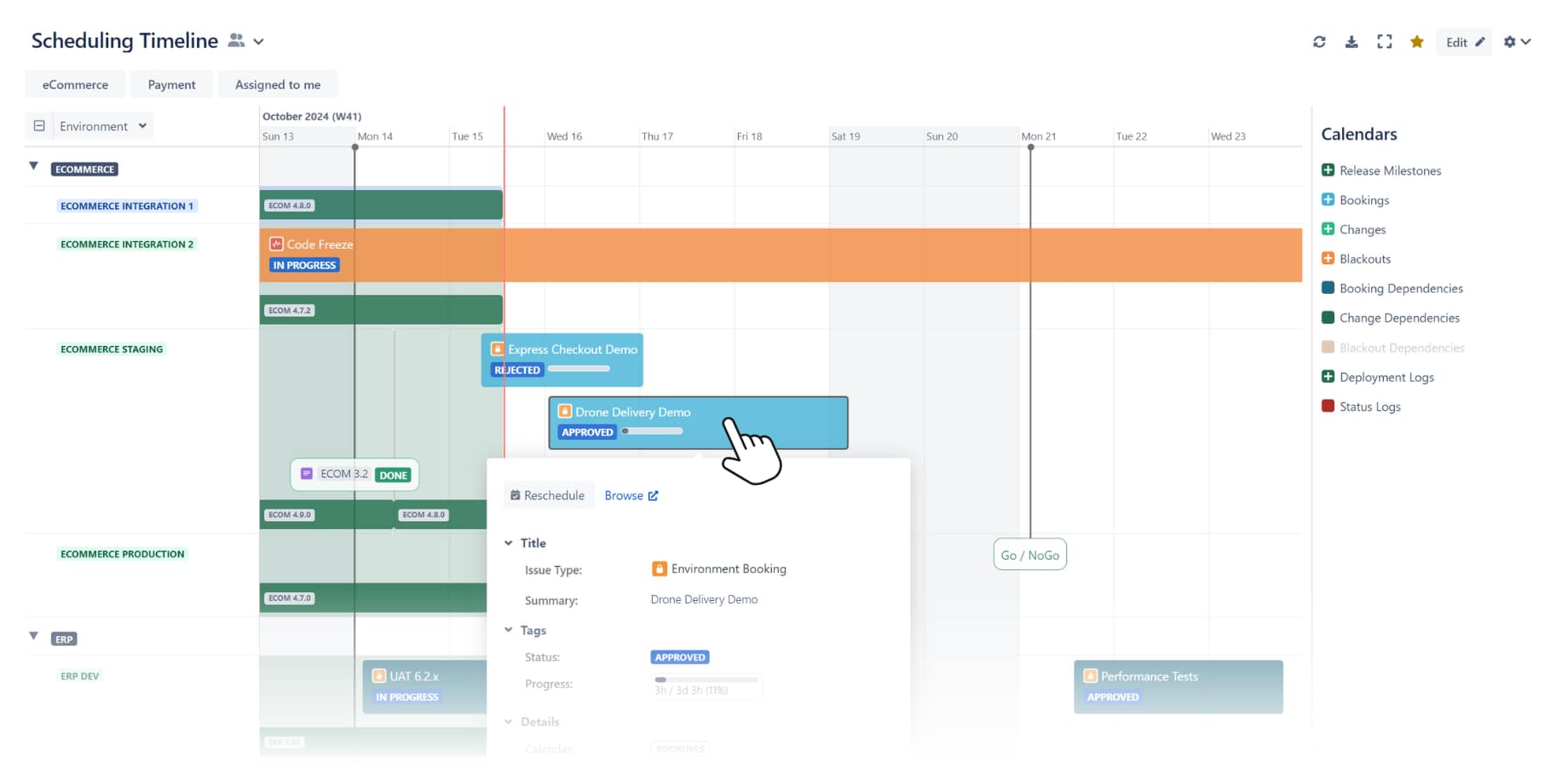
Environment Scheduling Timeline in Jira
James Rush describes this moment clearly:
“Golive is great, now the entire team has a centralized, real-time view of what’s happening. The ability to group components under services, customize scheduling, and trigger alerts has made coordination so much easier.”
With real-time information available inside Jira, teams stop negotiating reality and start working from the same, shared view.
Deployment Oversight & Timelines
Seeing what is running is only part of the story. Teams also need to understand how they arrived there.
Deployment visibility adds a temporal dimension: what changed, when it changed, and how those changes unfolded across environments. Without this, teams reconstruct history manually, often after problems appear.
Oscar Soler’s experience highlights how this clarity changes day-to-day release work:
“A key recent success was resolving an issue with visibility in our Deployment Logs Calendar. Our team required the ability to filter the statuses displayed in the calendar for better tracking and reporting.
This change perfectly addressed our specific use case and significantly improved our deployment oversight.
We’ve also noticed the timeline performance improvements that were recently shipped, which have made the app feel much more reactive.”
Here, release visibility supports continuity. Teams don’t just know the current state; they understand the sequence of events that led there.
If you’re interested in the technical side of pushing deployment information into Jira and Golive, check our documentation to explore it further. This setup can even create the missing Jira versions (fixVersion) automatically - your team will thank you!
Transparency Across Environments
For teams working daily with test environments, visibility shows up in smaller, quieter ways.
Pawel Struczewski summarizes this impact without embellishment:
“Managing test environments has become much more transparent thanks to Golive.”
It’s fewer checks to see if an environment is free.
Fewer assumptions about availability.
Fewer interruptions to confirm basic information.
Here, transparency shows up in everyday decisions, knowing whether an environment is available, in use, or ready without having to ask.
This kind of day-to-day clarity is explored further in our article on how teams manage test environments directly in Jira.
Environment and Release Visibility Beyond Environment Managers
Visibility has the strongest impact when it stops being confined to a single role.
While Environment Managers rely on Golive for structure and control, the same information becomes equally valuable to developers, testers, and other stakeholders who need context without extra explanations.
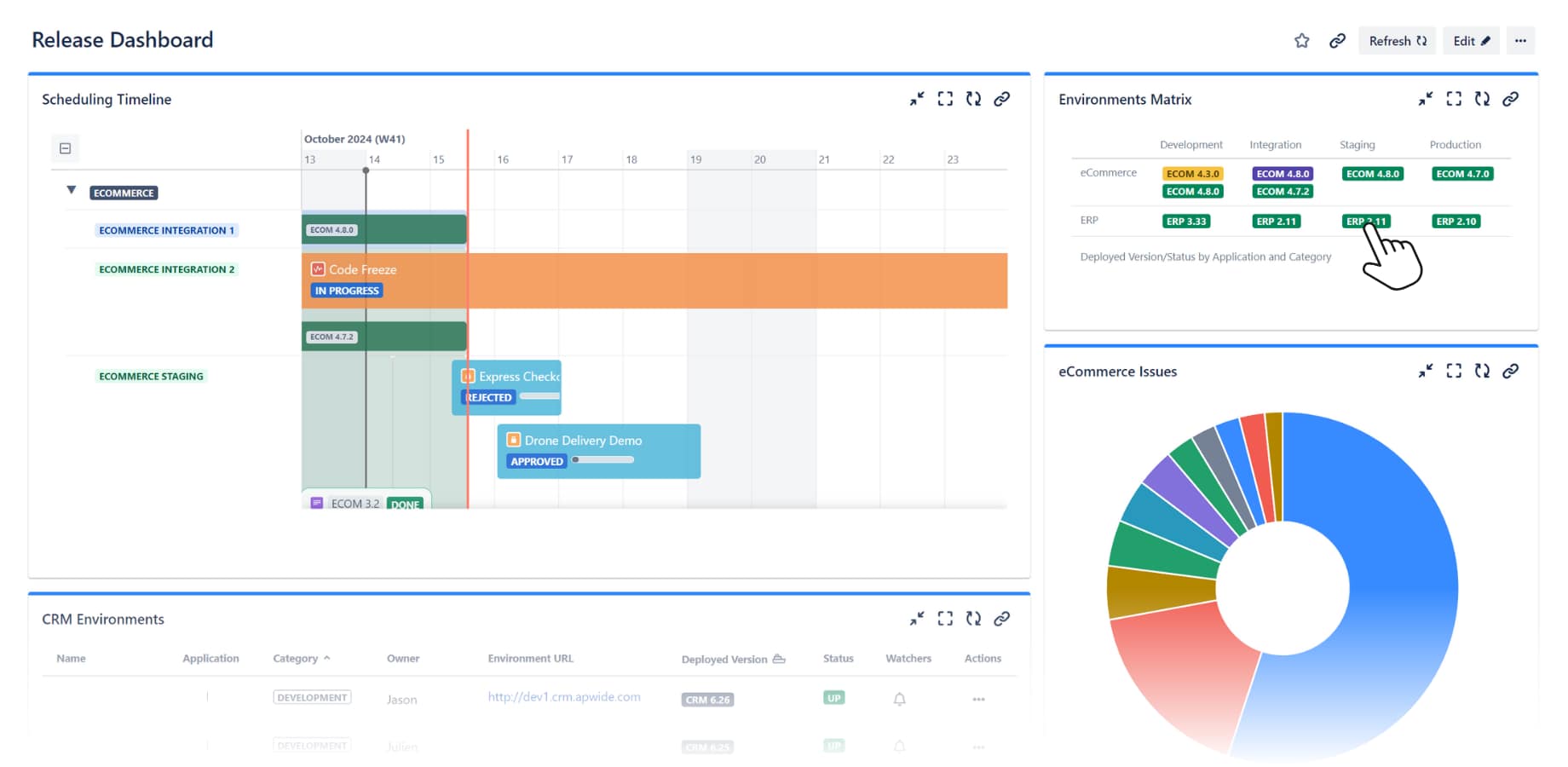
IT Environment Gadgets in Jira Dashboards
Tom Wells highlights this broader effect:
“As an Environment Manager, it's invaluable, but it's also really useful for other Squad/Team members too, especially when its data can be so easily accessed via Jira Dashboards, giving up-to-date environment deployment and activity information.”
At this point, visibility no longer belongs to a function. It becomes part of how teams stay aligned, quietly supporting collaboration across technical and non-technical roles alike.
“Golive has proven to be an excellent solution for managing our complex release process, and their proactive support on issues like this confirms it was the right move for our team.” Oscar Soler
Together, these experiences reflect a common pattern across roles and organizations. When environment and release information are visible where work happens, coordination becomes easier, decisions feel more confident, and day-to-day release work becomes more predictable, not because teams communicate more, but because they rely on the same, shared source of information.
Key Takeaways
- Replace spreadsheets to improve the environment and release visibility.
- Centralize environment and release information inside Jira.
- Use a real-time environment and release visibility to reduce status checks and manual updates.
- Rely on shared environment and release visibility to support safer release decisions across roles.